
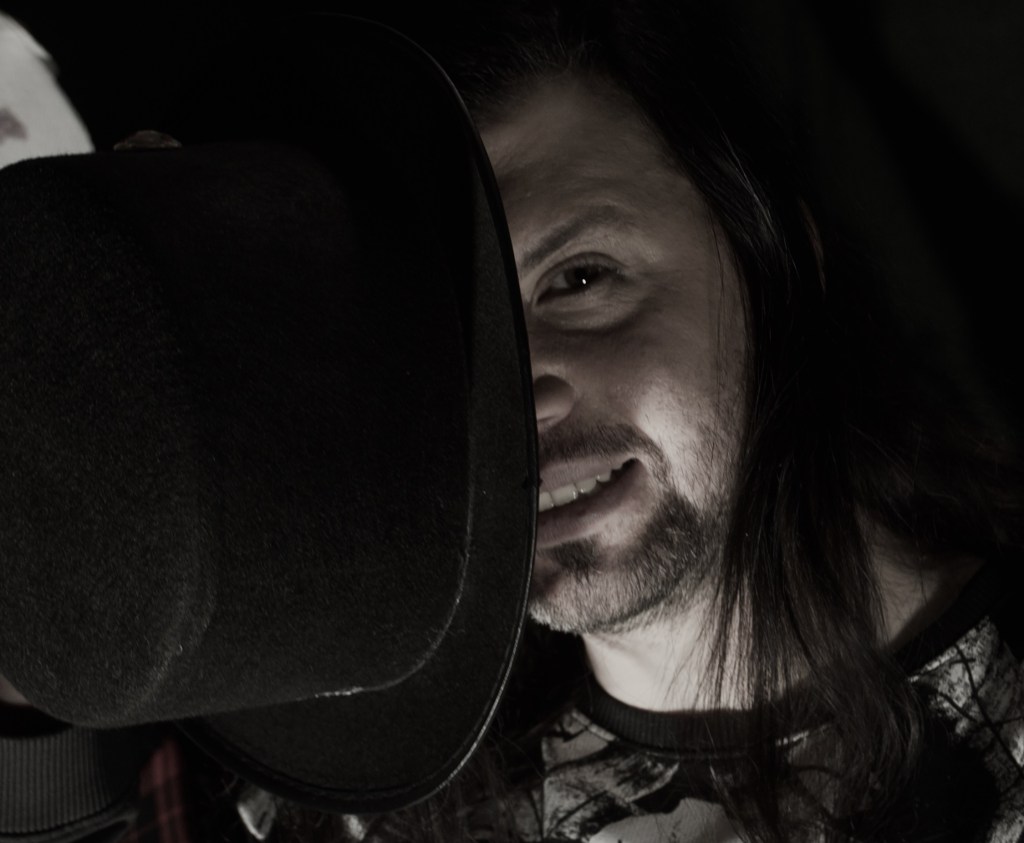
Everybody in Šiauliai knew Membrice back in the early 2000s as that weird kid dressed all in black, with long curly hair and an acoustic guitar on his shoulder, busking in the boulevard and shouting out from his lungs. I certainly did as well, and I think he’s helped me a lot to in discovering gothic rock, “The Cure”, “Bauhaus”, “The Sisters of Mercy” and other legendary bands. I remember copying some CDs from him. So I guess it’s only natural that we meet to talk about our generation, about his new project and his view on the world.
Many people know you as the vocalist and the songwriter of the dark cabaret band “Dancing Crow”, but you also hide behind the nickname “Membrice”. I’ve had that nick in my memory since I was a teenager. What does it mean and how did it come into your life? Why do you still use it today?
We were having a drink with friends in a cemetery one day and they said that everyone needs to come up with a nickname. Somehow there was a goddess of love and hate named “Membrice”, but I don’t even know if that’s really the case. Well, I chose it for my nick and have kept it for writing and used it on the internet. Online it is more like a pseudonym. There’s never a second one like it. And that’s very convenient. If you look for “Juozas Masteika” on Facebook, you will find some dude with a fishing rod. I don’t want to relate my full name to my personal social media account, it’s my personal stuff and I don’t think it should have anything to do with work somehow. I make a big distinction between work and my private life.
Can you tell us about your musical history now? I mean, what bands are you in, when did you start playing, where are you playing now? What was before that?
Maybe the first band I founded when I was 16 year old was the darkwave band “Atilsis”, in which Žymantė – you – also played the piano. I think it’s interesting that in all the bands I played at, piano had always had a special role.
We even recorded an acoustic album titled “Už”. There was a maximum of a hundred copies, although I believe there was around 60 of them and we were selling it for six litas and sixty-six cents (6.66 LTL) back then. This experience was about getting to know the music, understanding what playing in a band feels like.
I did go to a musical school before, but it was a completely different experience. They teach you how to play from sheets and understand music in a completely different way, without the freedom. When you play in a band, it’s a completely different experience. You get to experiment and that’s the interesting part.
Another project that was running “in parallel” between the age of 15 to 18 was busking on the streets. It was like a protest against my parents: I didn’t want to ask them for money and look for a part time job during the summers like the rest of teenagers of my age. In my case I made some money playing on the streets..
After experimenting with “Atilsis” and splitting up, I founded the “Dancing Crow” with my friend from Jonava somewhere in the vicinity of 2009 or 2010.
How many times has “Dancing Crow” split up and re-unite?
It’s hard to say. The original version was when we first formed and played, and recorded an album even though we’ve only been rehearsing together for a year. A part of the band members moved to Vilnius, even though I always lived in Vilnius and went to Jonava for rehearsals. Our drummer Deividas moved to Vilnius. Then the bassist moved to Vilnius. Only the keyboard player stayed in Jonava and didn’t want to go anywhere, so I had to find a new keyboardist. Then Evaldas from Kuršėnai joined as a keyboardist, And then we were still playing together for maybe two or three years.
And then the group split up, because I decided to try to live in the UK for a year. So there was maybe a couple of years off. Then I came back to Lithuania and we started the band again, but this time under the heavy metal influence. “Sugrįžimas” mark it – the lyrics are based on Ališauskas text. We rehearsed, played in gigs for about a year and a half. This genre didn’t stick to me. I didn’t like the fact that we sounded like everybody else. It wasn’t cool. It just wasn’t meant for me. I wanted to make something weird, peculiar, something strange. My band members were very angry with me back then, so there was a gap of maybe 2 years when I was looking for new band members. Then I invited Evaldas back while we were looking for other band members. So that was the third time.
And then we found new members, but they were very happy with meeting up once a week and just rehearsing in the basement. It was like fishing to them. I had more ambitions. I wanted to start making those records. So I invited the old drummer Deividas who’s still playing in the band today. Then both the bass player and Benas from Šiauliai came back to the band. We needed a new record…
The recording of the new album then took two years of torture. We were doing some obscure masterpieces there. I was getting very tired of the capacitance of the second one. Hence it’s titled the ”Mental Plague”. The recording took place at the time of the covid. There were a lot of big disagreements about the sound of the album itself, because one person says the vocals are too loud, the other one says the vocals are normal, the other one says it’s too quiet, and then there’s no agreement. You’re kind of ready to almost tear the other person to pieces because of a difference of opinion. A very toxic thing started with a lot of disrespect for each other. And that’s when things changed some more.
Around that time Benas decided that it wasn’t his preferred style of music and he didn’t want to continue playing with us. That’s when we discovered a new bassist which played extremely well and the whole group and the attitude immediately changed. Then another person changed and now we have a young yet promising pianist. Him and the guitarist – they are both in their twenties – but it doesn’t bother me. The most important thing is that they come, they try and they do their best. And it’s a very different feeling. Now it seems that when you come in once a week to rehearse for an hour and a half, and you achieve more than you used to in a month. All the people just want to come, to play, to do as much as possible to create something and it’s so refreshing. Nobody comes in just to to talk to each other: they come to actually play – not to smoke, to talk. I remember how hard it was before. You woulds spend four hours in a a rehearsal and you do something else and then you only play the two rounds of your old repertoire.
Now it’s whole different story. It’s fun for me to work with this group of people now, because I’m not really in charge of the art anymore, but I’m in charge of the image, the photo shoots, the videos. In essence, of the production and the social media. The creative work is done by the rest of the band members. I don’t really have the time anymore to work on songs artistically.
Do you no longer create the lyrics?
I still do, but it’s pretty easy anyway. Deividas also helps me to write something if I’m stuck.
There’s also a second project I’m involved with called “Niša”. It’s a post-punk/darkwave project and I just sing there and tweak the texts a little bit. We recently supported “She Past Away” here in Vilnius. I’ve been with this project for a while.
At some point the other member Tomas had shared a demo online and was looking for a vocalist.I heard it and thought that it had a great sound, but I didn’t have enough time to join him at that point. And then, for the second time, the same demo appeared on the Facebook group “Muzikantų brolija” (“Brotherhood of Musicians”). He still hadn’t found someone to sing for him. I decided to contact him, because I was looking for a new keyboard player for “Dancing Crow” and had more free time. And I’m glad we started working together. I have a lot of fun being a part of this project. It’s something new. I didn’t work with electronics before, but now I have to and it’s fun.
However, my main focus is on my main project – the “Dancing Crow”. We recently had an acoustic concert here at the Adomas Mickevičius Library. It was such an interesting experience with the grand white piano. We played some visualisations and the overall experience was awesome. There weren’t many people there, but it was such a cosy concert. I think we also manage to promote our work in such concerts, rather than recording new albums and promoting them online instead. It’s just not profitable to do albums nowadays. It takes a lot of work to record an album – usually at least a year, and it’s just pointless. Our society is hooked on swiping, they have no attention span and simply won’t listen to an entire album from the beginning to its end. Releasing a new album only pays out if you have a stable circle of listeners. Otherwise there’s very little opportunity.
There is more use in releasing singles instead, and making video clips. It attracts more listeners and viewers. And now we released a single called “Eugenijus” which is so fun.
“Dancing Crow” is not just about music, but there’s also an element of theatre. All these costumes, makeup, this dark aesthetic. Why does it matter to you so much?
I believe you shouldn’t go on stage with the same apparel as you wear at home. Dressing up is a means to express one’s alter ego. I think that sometimes it’s easier for a person to empathise with their alter ego and to become that epic personality that you see on TV. For me dressing up always helps, because plain black would be boring on stage. I may not be very interesting face to face, but on stage I’m a completely different crazy person. I actually go to second hand and thrift stores, buy clothes and jewellery not only for myself, but other band members as well. I even paint on these clothes.
It’s more fun for people to watch the musicians who are dressed up because nowadays music is about what people see, not only about what they hear. That’s what we’re trying to do: to make it more interesting for us to look at and to look great in photos. We try to convey our madness as a liberation from a society that expects you to be something they want. Here you have the opportunity to be what you really like and want. Just a little bit crazy. And not giving a fuck.
What does it feel like when you are on stage? Do you feel liberated?
I feel very good. When I’m on stage, I’m somehow completely different than usual. There is a bit of adrenaline, there is excitement, and at the same time there is a bit of experimentation, fun, and a bit of euphoria. Some dopamine. That’s the fun of it.
I am going to ask you a very different question now. Since you lived in the southern district of Šiauliai (“Pietinis”), you definitely knew about all the subcultures: marozai, fyfos and others. They identified you as a crazy dude with long hair and black nails, wearing those fingerless black gloves. And if I remember correctly, you used to love to sit next to “Šėtonkė” in the old cemetery before the chapel was demolished. How did you find this gothic subculture and why did you like it?
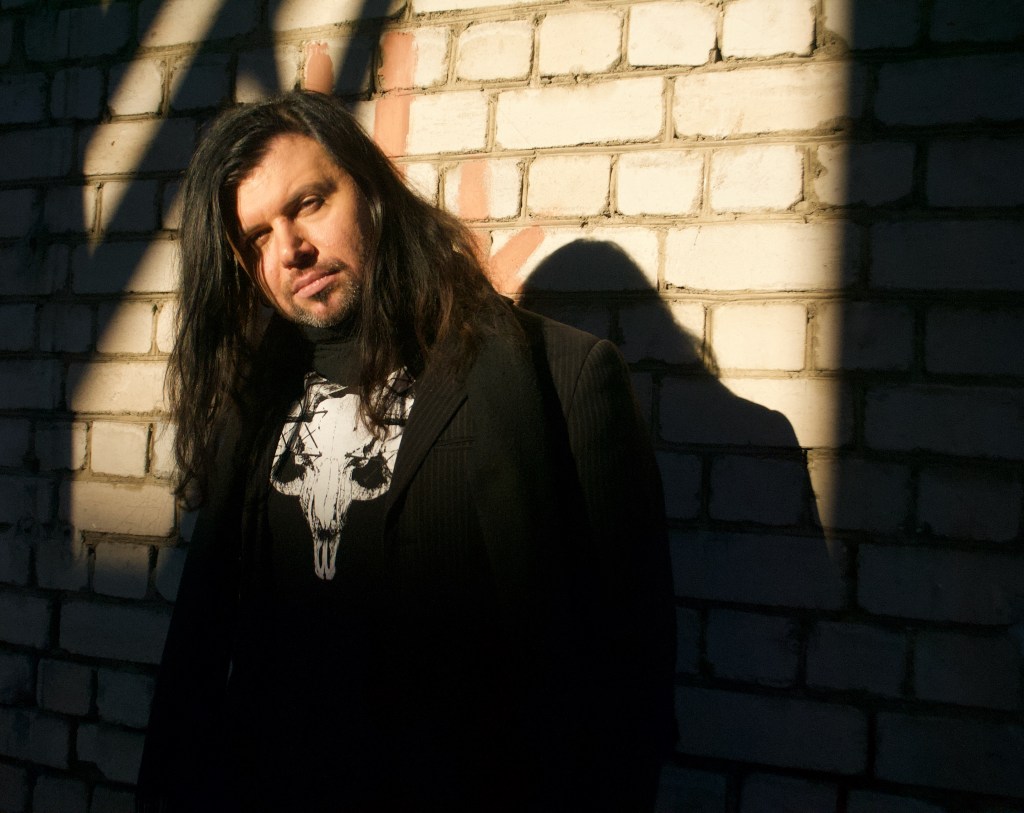
I liked sadder, melancholic songs from a very young age. I remember the kindergarten and the choir there. Everyone there was happy singing some energetic, fast songs, whereas I’ve always liked something a bit slower and sadder.
My dad used to listen to Viktor Tsoi a lot at home. I really liked it because his songs were sad and slower. Gothic music in general is gloomy and often much slower. The songs are less energetic. And I loved it. I loved the expression.
Then I found Edgar Allan Poe. His books had such a mystical romanticism and I was very impressed by his work. Afterwards I discovered Tim Burton, his romance and beauty of the darkness. And I myself really liked the whole thing and somehow.
I discovered the dark music at that time. We had very little access to the internet back then – maybe in those Internet cafes only. I remember discovering “HIM” which have influenced me quite a lot. Then I discovered “Tiamat”. I also accidentally discovered a man in Šiauliai who had a lot of music. And then I was introduced to “The Cure”, to the “Sisters of Mercy”, and with the Lithuanian band “Mano juodoji sesuo”, who are now my friends. I was fascinated by that melancholy in their music . “Atilsis” was quite melancholic as well. And we did as much as we were able to back then.
It was an interesting experience to live in Šiauliai in the 2000s. Some people bullied me, but I didn’t really give a fuck. One time I beat up a senior classmate, a “marozas”, because he crossed all the boundaries with his bullying. After this incident everybody started to say hello to me and nobody dared to bother me anymore, because I’ve been doing karate for a couple of years. When I showed them their place, they had to stop.
With the skinheads it was a bit worse because they were older guys and there was nothing you could do against them, so you had to avoid them somehow. That was the scariest thing of all. Nowadays, people are generally more tolerant, softer, not like before. In Kaunas you could be hit by a random person walking down the street back then, but now you don’t.
Another thing that really fascinated me was that I knew how to play some russian songs, so I could play the guitar and I thus shut off the morozai. It was not a bad thing to be able to play the guitar sometimes. Especially in Šiauliai in the 2000s.
What is the craziest thing you have ever done?
I covered myself in blood during the Alytus City Festival and there were grandmothers of all kinds in the audience. It was fake blood, but everyone was shocked.
I remember another funny situation which occurred during the “Be2gether” festival. I was waving this fake dick made out of cardboard – it’s a like a dick with the head – and its head fell off. Then a girl came running up and took its head.
Why didn’t you grow bored of being a “goth”?
I specifically chose the music route, because people around me – teachers, parents or adults around me – seemed to be so dull and boring. I don’t find that life interesting and that’s why I won’t grow out of it.
I used to be assured by other adults that I would grow up and stop being a goth, because everybody does that. It annoys me a lot and I hate when someone tells me to do this or that. I remember once a band member asked me to not put on a skirt, so I put it on on purpose. Why do you have to tell me what I have to wear? You have no right to tell me.
Aren’t you telling your band members what THEY are supposed to wear during a gig?
I don’t force anything on them. We discuss the it over, so they have some freedom to choose. If you’re against all of this, maybe you shouldn’t play in our band because it’s a part of our identity.
You used to live in London, but for some reason you came back. Why?
For me, it was just too much. It lacked that cosiness that Vilnius has. I know what kind of village I live in, but I like this village so much. I find it very cool and cosy. In London or in Berlin you feel the chaos of multiculturalism and you seem to have too much of it: millions of people walking everywhere… I get dizzy with the number of people. Somehow I didn’t like that feeling very much, and Vilnius is the best, the nicest place. In these big cities, the drug culture is huge and triggers me a lot, it scares me. Here the situation is much better. It was all very alien and unnatural to me. If it’s the same here, it’s on a smaller scale and it looks somehow a bit nicer.
Furthermore, I like the Lithuanian culture itself. In USA, everybody smiles at you, says ‘hi’, there’s a community there. But I don’t need this community. Fuck that shit. I like that the people don’t smile to me. During the covid I have realised that I am a bit of an introvert. When I had to stop because of covid, everything was so good. The best time of my life. Before, if life stopped, you’d feel some guilt like you’re not doing something or if you’re missing out. And here it all stopped. It was cool. I could BREATHE.
During the covid pandemic, I’ve also learned a lot technical things related to singing and music. I don’t really listen to much metal myself, but it interests me as a skill. For instance, when you go to a gym and see someone deadlift 200 kilograms, it fascinates you. The same is to me with metal music. I don’t listen to it for my own pleasure, but I’m always curious about what they’re doing there, and I am also curious about the technical side of things. I learned how to scream and even use it with the “Dancing Crow” sometimes. There are so many good lessons on YouTube. No teacher has taught me as good as YouTube. So I sincerely enjoyed the pandemic.
What inspires you to write music and songs?
It just comes into my head and then we adapt it according to the music when we rehearse. Sometimes it’s the melody which dictates the lyrics, sometimes it’s clear in advance what you want to say before the music is created: we have some kind of a mini-theme and we start with that and we say, “Come on, let’s do a piece”, and that is the end of it.
As for the process itself, the inspiration just doesn’t come easily as before. I have to deliberately sit down and start writing. I get inspired by reading other authors, writers, poets. I have to dedicate time for that and then sit down and write.
Why do you mostly write in English?
It’s always easier to write it in English because it seems to be a much easier language to sing in, and somehow it seems to be much easier to even pronounce the lyrics than in Lithuanian. Writing in Lithuanian is a challenge, whereas writing in English is almost like a state of flow.
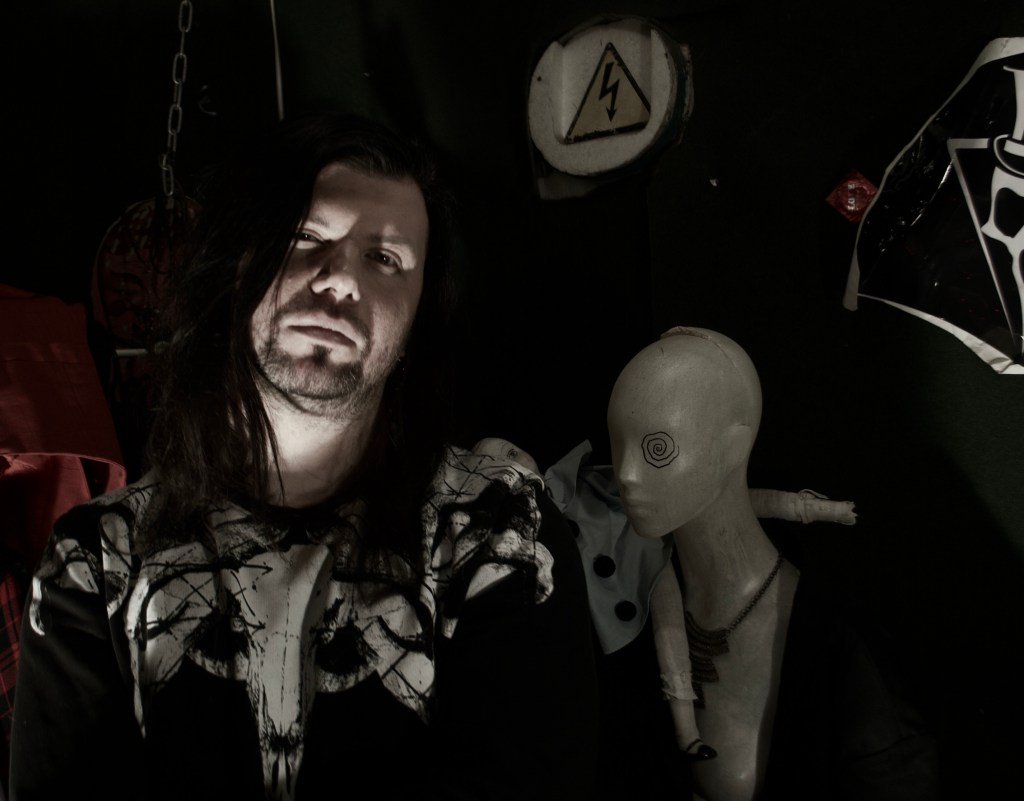
Why did you choose dark cabaret rather than gothic rock, darkwave or any type of metal?
That’s my inner punk who tells me not to it do like everyone else. And somehow all those cabarets are different. They are not so completely mechanical under a single framework. That’s what fascinates me about it, as well as the theatricality of it. You can experiment a lot with this style and I love it.
The only caveat is that it is more difficult to find listeners, but we are trying to integrate. We’re trying to do more of those simpler songs, because “Mental Plague” was very avant-garde, compared to the way we are starting to write new songs now which are much simpler.
In general, I’m very happy with the way things are going at the moment, as we’re allowing ourselves to experiment a lot. Cabaret is fun.
What ambitions do you have for this coming year?
We have an ambition in general to do as much recording as possible. I’ve set a plan for everybody to release a piece every two months. And that would be very good and very convenient and expand our options. And of course, with the new line-up, we still have a bit of a new style there, because with us, the music is always changing. When a new person comes to play, we allow them to experiment. There is a rhythm to it, but he/she can make the parts different. That doesn’t bother me.
What are your top priorities in life right now? What’s most important to you, how would you arrange it?
Music has been the biggest part here for a long time. I arrange sports and other leisure activities around music, rehearsals and recordings. After that, it would probably be my personal life. And then there’s work. But I don’t like to talk about work. I never consider work as part of myself somehow. It’s just a thing where you get money to keep doing something important.
Music is so important that I feel sad when I am not involved. Life becomes dull without it. I then start drawing, decorate our stage costumes. Creativity is a very good thing in itself, it frees you from the everyday mundane life. Creativity is the thing that frees people and helps them express themselves.
What book would you recommend?
Anything from Stephen King.I would recommend it to anyone. It looks as if he writes about some kind of miracle when you don’t know about him, but in fact he always writes about human psychology. I am so not looking forward to the day he dies. I read his books and I always regret reading them, because I won’t have much to read afterwards.
What would you wish to the readers of this interview?
I wish everyone to be themselves and to be brave. Just be yourself.
 Deviant Generation
One thought on “Membrice Joseph: my inner punk tells me not to it do like everyone else”